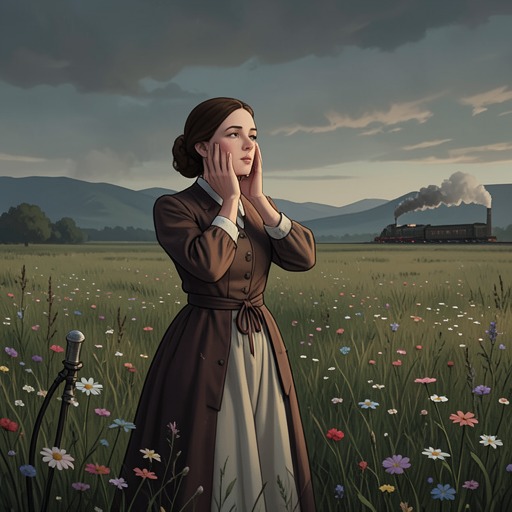
Billy Andrews's proposal to Anne
Anne of the IslandBilly Andrews’s proposal to Anne Shirley is her first marriage proposal, but it arrives by proxy and with little of the romance she had imagined. Jane Andrews conveys her brother’s offer while Anne is in bed; Anne declines because she feels no love for Billy. The episode turns an anticipated romantic milestone into an awkward, practical negotiation, exposing the distance between Anne’s idealized expectations and the ordinary terms on which marriage is sometimes proposed.
Background and Circumstances
Jane raises the subject directly, asking Anne whether she would like Billy for a husband. Anne is so unprepared for the question that she falls back onto her pillows and asks whose husband Jane means. Jane explains that Billy has long wanted to marry Anne but is too shy to ask her himself, so he persuaded his sister to make the request. The arrangement gives Jane the uncomfortable role of intermediary: she says she would rather not have undertaken it, but Billy would not let the matter rest.
The proposal has a concrete practical basis as well as a personal one. Billy’s father has given him the upper farm in his own name, and Jane says there is now nothing to prevent him from marrying. She presents Billy as dependable, hardworking, and free of bad habits, and says he would wait until Anne finished college if necessary, although he would prefer to marry in the spring before planting began. Jane also admits that Billy would rather have Anne, but could marry Nettie Blewett if Anne refused. Her case for the match therefore combines Billy’s affection and practical prospects with the prospect of a secure, dependable husband; it is not founded on any courtship between Billy and Anne that she has recognized.
Anne’s Refusal
At first Anne struggles to respond without hurting Jane. She says that the idea of marrying Billy had never occurred to her, then recovers enough composure to make her decision unequivocal: she cannot marry him, feels nothing for him in that way, and sees no point in considering the matter further. The refusal is not a judgment that Billy is unworthy. Jane has described him as a good and hardworking man, and Anne does not claim to dislike him. The decisive difference is between being able to acknowledge someone’s good qualities and wanting to share a life with him.
Jane accepts the answer, though not warmly. She says she had not thought Anne would agree and recalls that she had warned Billy the proposal was unlikely to succeed. Even so, Jane feels some resentment that Anne, an adopted orphan without family connections, has declined an alliance with one of the Avonlea Andrews. The exchange thus carries a social sting beyond the failed proposal: Jane’s idea of family standing and a promising match briefly colors her response to Anne’s personal choice.
Immediate Aftermath and Disappointed Expectations
Jane goes to sleep quickly, but Anne lies awake for hours. The delay matters: the scene does not leave her simply amused by an absurd proposal. The next morning, after Jane has gone home with a trace of coldness in her manner, Anne shuts herself in the porch room and finally laughs. She cannot share the story with Diana Barry: she has promised secrecy to Jane, and she worries that Diana would tell Fred Wright. Even the person she most wants to confide in is therefore unavailable to her as a listener.
Anne calls the episode funny but also feels a sting. Before it happened, she had imagined that her first proposal would be beautiful and memorable, whether she accepted or refused. In those private scenarios, the suitor was handsome, eloquent, and distinguished; even rejection would end in a graceful, almost romantic parting. Billy’s offer instead comes through his sister because his father has settled a farm on him, with marriage before planting season preferred and Nettie Blewett waiting as an alternative. Anne laughs at the contrast, then wonders whether experience will wear away her other cherished dreams as well. The episode’s consequence is therefore inward as much as social: her first proposal changes her view of romance by confronting her ideal with its unexpectedly prosaic reality.
Marriage, Practicality, and the Wider Story
The proposal belongs to a larger narrative in which marriage can be discussed in terms of affection, money, work, and security, but those considerations do not produce the same answer for everyone. At Redmond, Philippa Gordon speaks of wanting a rich husband because she considers herself extravagant and unable to do useful work, while also insisting that she cannot love and does not want the vulnerability she associates with being in love. Her frank calculations provide a foil to Anne’s refusal: a good match can be assessed by material conditions, but Anne’s decision here turns on the absence of romantic feeling.
Later episodes sharpen the contrast between formal romance and inward conviction. When Roy Gardner proposes in a carefully chosen harbor pavilion, Anne initially expects to accept, yet cannot say yes and withdraws her hand. The polished scene and its sincere words still cannot substitute for the feeling she lacks. Mrs. Skinner, by contrast, recounts choosing the poor Thomas over the wealthier William Obadiah Seaman because she loved Thomas and did not love the richer suitor. These later examples do not alter what happens with Billy; they place Anne’s first refusal within a continuing examination of what makes a marriage desirable, and whether status, security, or romantic form can stand in for love.
Jane’s later marriage to Mr. Inglis, whom her mother describes as immensely wealthy, adds a quieter after-note to the earlier scene. Jane had hoped Anne would become her sister through marriage to Billy; instead, Jane herself enters a financially advantageous marriage, while Anne remains unwilling to choose a husband merely because a match seems practical. The proposal’s significance lies not in any lasting courtship between Billy and Anne, but in the early clarity of Anne’s refusal and in the first crack it makes in her imagined script for romance.